Sunday, September 27, 2020

When Covid Cuts Human Noise, Birds Sing Sweeter


Covid 19 may be hell for people, but, in Shakespeare's words it "Becomes the touches of sweet harmony" for birds.

An interesting thing happened when everybody stayed home in San Francisco and The City went silent.

A researcher noticed that the song of the male White-Crowned Sparrow got softer and more nuanced - sexier-sounding to the females.

I guess we should all take a lesson. Silence offers so much.

The links below have the story. One of the links has a 4-second video you can click on  to hear the song. Enjoy!

https://www.sciencemag.org/news/2020/09/when-covid-19-silenced-cities-birdsong-recaptured-its-former-glory

https://www.popsci.com/story/environment/more-bird-song-pandemic/


Sunday, September 13, 2020

Good News? Not So Much

 Yes, a lot of stuff sucks right now, starting with the misery that can be traced to politicians, moving through natural disasters, and ending with dreary stuff in your local community.

So what is happening that's still good?

The answer may be predictable from a writer whose most popular fictional character may be a dog.

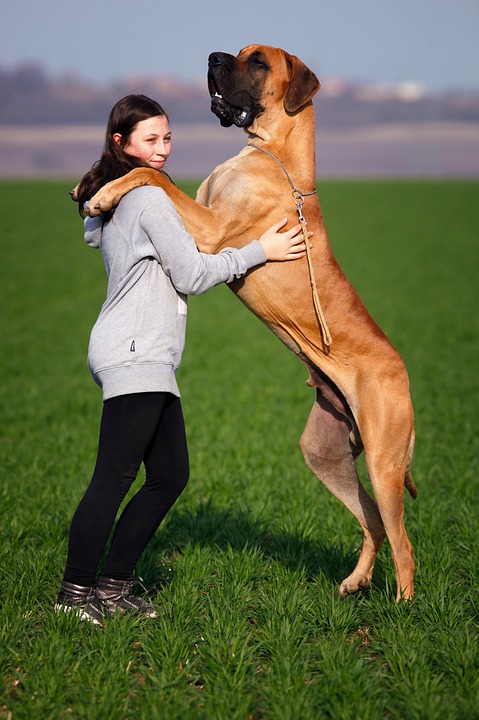
Of course, unless you're an animal intelligence scientist, dog stuff isn't considered lofty and intellectual. But here's the beauty of dogs, no matter how prosaic it is.

They love you no matter how stressed you are and no matter how difficult life can be. 

So go and give your dog some attention. He or she will make you feel better.


Sunday, September 6, 2020

New High Temp Record?

 South Lake Tahoe is projected to hit 95 today. Ouch. The previous record high for September is 94.


So why is the Basin crammed full of tourists? Because Sacramento and Redding are both looking at 111 degrees. Stockton is 110 degrees. So if you drive up to a mere 95 and go out on the boat or maybe jump in the lake, which, not too far out, could be in the 50s, that'll cool you off!

Enjoy!

Sunday, August 30, 2020

Do Animals Have Rights?

We love our dogs. But do they have rights?

Do other animals have rights?

It appears to be such a simple question. Our impulsive answer seems to be "Of course, animals have rights." Or, "They certainly should have rights."

But immediately, the idea becomes complicated. 


What would those rights be? The right to be left alone? The right to not be tortured? The right to have their territory undisturbed? The right to not have their culture (or whatever you want to call it) be destroyed? The right to not face unnecessary pain? The right to not be treated in a way that we wouldn't treat humans? The right to not be imprisoned in a small cage? The right to not be killed for sport (fun)? The right to not be forced to do degrading work? The right to not be eaten?


Let's go to the most basic right of all, the right to live. Do animals have that right? Do humans have that right? Is the human right to live greater than an animal's right to live?

In my recent book, TAHOE HIT, a character poses a question about this to Owen. To make it more poignant, the question comes with a spin. Instead of asking if a man has more right to life than a dog, the question is, "Does a very bad man automatically have more right to life than a very good dog?" The questioner goes on to elaborate that the bad man could be abusive and violent and wicked, while the dog could be sweet and kind and a friend and protector of its human family. I made those qualifiers to put the question in sharper focus.

Obviously, I wanted the question to be thought-provoking. I assumed (and still do) that some people would say that all humans have more right to life than any animals. I imagined the subject would - or could - fall into the realm of "God made humans to be very special, and humans thus have a sacred right to life, more so than any other creatures." I even assumed I'd get some angry email on the subject.

What's interesting is that of the many people who have sent me email, all said something like, "A very good dog absolutely has more right to life than a very bad man."

Of course, people love their dogs. And elephants and dolphins and birds and horses. Are our feelings about them influenced by how beautiful and lovable they are? Can we reconcile laws that say you can't sell horses or dogs for slaughter for their meat, but it's okay to squish spiders? What about mice? Squirrels? If a skunk takes up residence in your crawl space, refuses to come out, and makes your house unlivable with its spray, is its right to life any less?

Of course, we might say, this is my house and I was here first, and you can't invade and live in my house.

But when the housing and shopping mall developers bulldoze the land and "homes" of thousands of animals, have we not done the same thing? The deer and birds and bear and fish and gophers and mountain lion were doing just fine without us. Then we came along and destroyed their world. And we justified it by saying that people needed the housing and the jobs. 

Beneath our behavior lurks a familiar hubris. We humans are the lords of the Earth. Animals are just, well, animals. If our supertankers leak oil and destroy ocean habitat, that's simply part of the price of running our cars and heating our houses and creating all those trillions of plastic things that we throw away, some of which wash into those once-pure oceans. If our greenhouse gases melt the arctic ice and the polar bears and penguins go extinct, that's also part of the price.


The implication is that whatever the rights of those animals, our rights supersede them.

In TAHOE HIT, there is mention of the great naturalist Aldo Leopold. 100 years ago, he proposed that we leave "Blank spots on the map." Areas with no roads, no development, no wilderness trails and campsites, no hotels, no fishing or fish stocking of lakes, no dams, no hunting, no airplane overflights, no mosquito insecticides, no people."  

It doesn't take much observation to realize that people have gone everywhere on the planet, even to the depths of the deepest ocean trenches. And everywhere we've gone, we've taken over and dominated. There are no more blank spots on the map. From the perspective of most animals and other life, we've made the Earth much worse, not better.

Scientists say we're in the midst of the 6th greatest extinction in Earth's history. Previous mass extinctions of plants and animals have come as a result of huge volcanic activity or impacts by asteroids, events that made our planet inhospitable to life for many years.

This new mass extinction that is unfolding is called the Anthropocene Extinction. A fancy word that refers to the fact that this new extinction of life is caused by human activity. Greenhouse/fossil fuel gases that lead to climate change. Habitat destruction that takes away the "home territory" of millions of lifeforms, both plant and animal. Scientists say that millions of plant and animal species have already gone extinct, mostly from climate change. Some, of course, we've directly killed off. The California Grizzly. The Passenger pigeon.

What makes the tragedy worse is that we have the technology to stop and even reverse this decline. We know how to make renewable energy - wind farms and solar farms, etc - and we know how to implement conservation sufficient to create a "carbon neutral" society. (More fancy words to describe an economy that doesn't burn oil, which produces all those greenhouse gases.)

What's in the way of making this better, less-damaging world? There are lots of reasons. The biggest may be spineless politicians who don't have the political will to make a better world. Why? Because they are afraid that whoever is unhappy with change (there are always some people who are unhappy with change), they will lose votes and be out of their cushy jobs. So many politicians spread fear and distrust, as they always have through the ages. And some politicians support policies that nearly everyone knows are bad for the Earth. Why? It's hard to know. The drill-baby-drill attitude and the effort to take away protections of remaining wilderness areas only make sense if you want to appeal to people who don't care about the future of the planet or who believe in the unimaginable conspiracy/hoax notion that the Earth isn't actually changing. Those dry mountains that used to be covered in vast glaciers, that's photo-shopped. Like the moon landing was photo-shopped. Like the Earth is flat.

Meanwhile the rights of animals - whatever those rights are - will continue to be trampled by people.

Maybe if we step back from all the arguing and simply look at all the beautiful animals, we can frame things differently. What's good for the zebras and the tuna and the flamingos, is good for us. Stop arguing about the current events.

Instead, consider your dog. Does he or she have rights? What are you going to do to ensure the continuation of those rights? Somewhere in your answer may be the survival of our Earth, what Carl Sagan called our Pale Blue Dot, floating lonely in the vastness of space. Protecting animal rights might just result in protecting our planet.

Sunday, August 23, 2020

Future Book Progress Report

While Tahoe Hit (Owen McKenna #18) is leaping forward in ideal book launch fashion and I couldn't be more pleased with its reception, the writing of Owen McKenna #19 is lurching forward like a literary ancient sloth trying to extricate itself from the La Brea Tar Pits.

Of the many presumptions about the life and schedule of a writer, one of the most persistent is that writers must first and foremost write religiously every day until they produce two or five or ten pages, whatever is their predetermined production level. This is assumed to be a given for successful writing.


However effective such a schedule is for many writers, it is inapplicable for perhaps most. There are too many other tasks for writers to do each week to always be productive. (One can't write well if one is in the car all day traveling to and from an event.)

So it seems that with most events shut down, this would be a boon for writing production. And to some small degree, it is. But the surprise for me is that while I'm not spending time giving talks and attending events and festivals, I'm spending much more time with correspondence and phone calls, communications that are often about accommodating the cancellation of all my events!

So my schedule is relatively unchanged. I can't write five pages a day when I'm doing ten hours a day of other tasks.

That doesn't mean I don't have a production schedule. I do. It just isn't a daily schedule but a yearly schedule. Every year, I have to have a book out if I want to continue to have a writing career. 

So the next McKenna, which I have had simmering in the back of my mind for a year or so, is gradually taking shape. I've developed what I think is a viable story line. And the pages are beginning to gather.

Stay tuned...


Saturday, August 15, 2020

In Praise Of Dark Night Skies


This week we went out on the deck one night, leaned back in our chairs and watched the sky for Perseid meteors. These happen when the Earth  moves through debris remnants of the Swift-Tuttle comet, something it's been doing for at least a couple of thousand years.

The comet loops around the sun every 133 years. The comet is about 15 miles in diameter. When the comet gets near the sun, the sun's heat loosens the ice that holds the comet together, and bits and pieces are released into space. When the Earth moves through that region of space, some of those little chunks are on a collision course with the Earth, and they fly into our atmosphere. Others might possibly miss us but are pulled in by our gravity.

The comet is moving at something like 130,000 miles per hour. When those high-speed bits of comet debris hit our upper atmosphere, the friction of such speed burns them up, making a bright flare with a trail of bright, twinkling dust.

In the image above, if you look closely you can see the Milky Way in the center. (That's our galaxy with hundreds of millions of stars filling space with a milky light.) At the bottom is a meteor streaking across the sky.

Below is an telescopic picture showing deep space in the distance with a meteor streaking across the sky.


 If you want to see these amazing events, all it takes is a dark place, a chair in which you can recline, and patience. (And ideally, a "New" moon, i.e., when the moon isn't up at night taking over the sky with its bright light.) Let your eyes adjust while you sip some wine, plan to spend a half hour watching the sky, and you'll be surprised at what you see.

We saw six bright meteors, including two that were "all time personal record" territory. We also saw six or seven satellites, about half moving south and half moving north. 

Once your eyes adjust to the darkness, the sky is very rewarding and memorable to look at . A year from now we won't remember whatever Netflix movie we saw this week. But we'll still remember sitting out and watching meteors.

Try it. You'll probably agree that it's very worth taking time to witness what's going on up above our heads.


Sunday, August 9, 2020

Amazon #1 Hot New Release

It's been estimated that one million new novels are published each year. That works out to nearly 3000 a day. Lotta competition for reader attention.

So wasn't I a happy guy to see that my new book, TAHOE HIT, rose to the top of Amazon's list, books that Amazon calls its "Hot New Releases." My heartfelt thanks to all you readers!


Sunday, August 2, 2020

Tahoe Hit Is Published!

Tahoe Hit, 18th Owen McKenna mystery, is published today.


Tahoe Hit is now shipping to bookstores and, eventually, libraries. It will take some time to move through the pipeline. But you should be able to get it wherever you've gotten previous Tahoe mysteries. Please ask your librarian to put it on their order to the distributor Baker & Taylor.

If you read on Kindle, it is available today. If you read on another type of ebook reader such as Nook, it won't be available until next spring. Sorry about that! 

Thanks very much for your interest!

Sunday, July 26, 2020

Big Yellow Flower In The Sky

They come in lots of colors and patterns. Sometimes they float low and periodically roar and spit flame like dragons. Between the noisy outbursts comes an eerie silence, punctuated by occasional laughter.  Other times they float so high you never know they are there unless you happen to look up. They look so small it's hard to imagine that they are the size of 7-story apartment buildings.

This yellow flower was high over the lake early in the morning

This balloon reminds me of a favorite Robert Louis Stevenson poem I learned as a child. If Stevenson had seen such balloons he might have written about them the way he wrote about swings...

How do you like to go up in a swing,
      Up in the air so blue?
Oh, I do think it the pleasantest thing
      Ever a child can do!

Up in the air and over the wall,
      Till I can see so wide,
River and trees and cattle and all
      Over the countryside—

Till I look down on the garden green,
      Down on the roof so brown—
Up in the air I go flying again,
      Up in the air and down!

Sunday, July 19, 2020

Comet Neowise!

You all probably know about the most impressive comet to visit our solar system since Hale Bopp in 1997.

In recent days, Neowise was visible in the early morning. However, if you are like us, it may not have been convenient to get up at 4 a.m.

Now, for a few more days, it's visible in the early evening, to the northeast, below and a bit to the right of the "pan" of the Big Dipper. We are fortunate enough to see it from our street. You need it to be quite dark (ask your neighbors to turn off their yard lights), and it takes some time to let your eyes adjust. When you see it, you will agree... It is very cool.

If you'd like to see what the comet looks like from the International Space Station, here is a stunning video complete with music composed by Sean Doran. Here is the link to youtube:
https://www.youtube.com/watch?v=Yh1_wHdUx3Y

Like lots of youtube videos, you have to watch an ad for 15 seconds or so, then comes the video. If you click on the "full screen" button and turn on your sound, you will be impressed. It's a 7-minute video showing the Earth below the International Space Station at night. You can easily see the ground and city lights moving below the ISS, which is going 17,000 miles per hour. The view is spectacular. As the video shows, the ISS is moving toward dawn, and the upper left side of the screen shows what the growing dawn light looks like from the ISS. At about 3 minutes and 30 seconds into the video, the comet rises above the horizon. There is no magnification in the video, so it looks quite small and distant. But it is gorgeous.

With the beautiful music, the whole 7-minute viewing experience is calming and meditative and reminds the viewer of just how special our Earth and the solar system is.

Amazing.

For the next few days, find a dark place with little light pollution and a view to the northeast. Go out at 9:30 p.m. or a bit later. Look for the Big Dipper. The comet will be below the pan of the dipper.

Sunday, July 12, 2020

Bear Food

I watched from a safe distance as this mama bear went down the street on the day of trash pickup. (Bears show up each week on trash day. How they know when is a mystery. Smell? The clanging of the trash truck? Their little pocket calendars they carry around with the monthly pictures of especially attractive dumpsters?)

This bear opened every container with practiced skill, showing her two cubs (just to the side of this picture) the various techniques. She used her teeth to bite the edge of the garbage can lid and lift it off the can. She used her paw to tip the can over and pull out the bags inside. She rolled each bag over, knowing exactly which ones to open up and which ones to leave, i.e., scented trash bags don't fool a bear.

Tahoe locals know to put garbage in bear-proof containers or bring it out just as the trash truck comes down the street.

Behind this bear you can see the garbage that vacation rental tourists set out in the street. Big mess, and potential big fine.

When you come to Tahoe, and it comes time to throw out your trash, please take a moment to learn the where/what/when aspects of garbage collection. It will save you a hassle and some money, too.